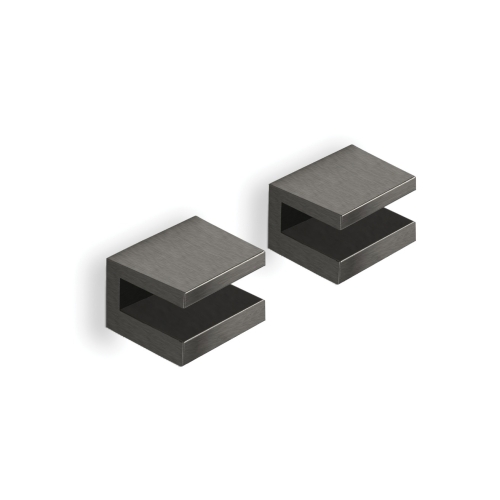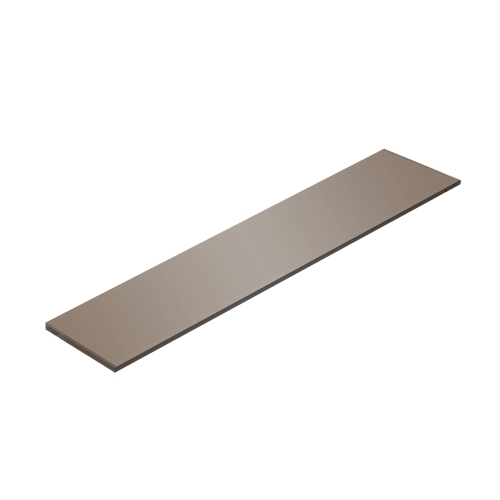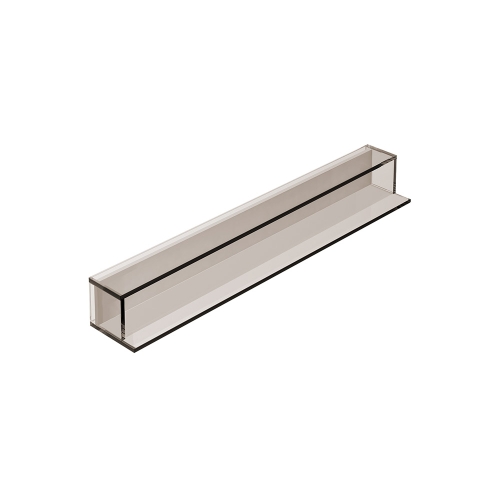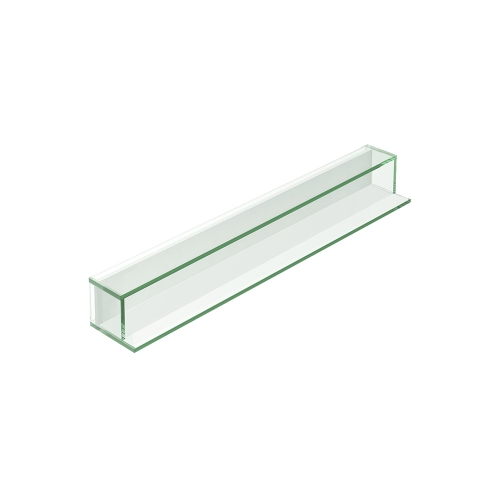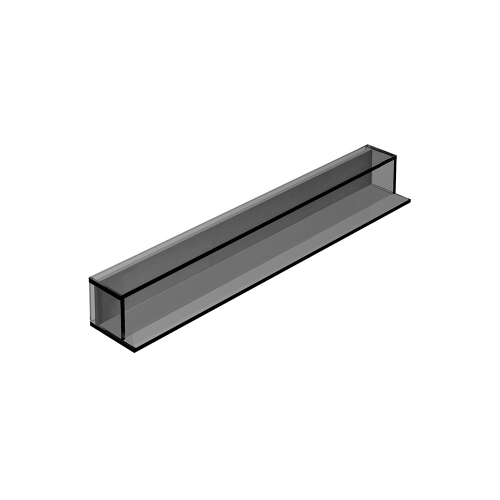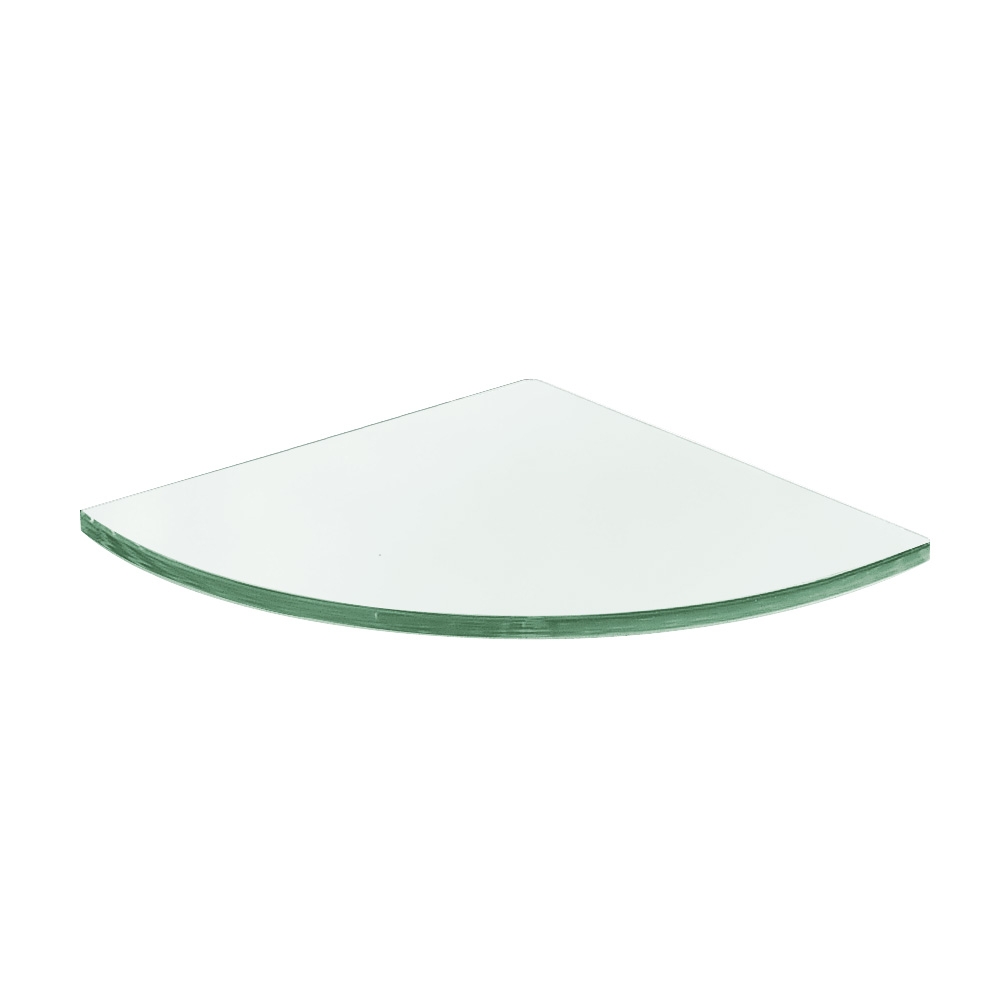
The corner doesn't have to be wasted space. Pier Corner wall-mounted bathroom glass shelf fits neatly into any corner and pairs with Pier Shelf Brackets to keep everything close at hand.
The mirrors and accessories people keep coming back to.
Best Sellers
Your favourites and the most sought-after pieces.
Section 1
Can I use a standard mirror in a bathroom?
You can — but it is not built for the conditions a bathroom creates.
A bathroom is one of the most demanding environments in any building. No other room combines heat, steam, water and temperature change on a daily basis. Every hot shower raises the humidity. Surfaces are splashed with water. Temperatures shift from cold to hot and back again. Over time, these conditions affect every material in the room — including mirrors.
How a standard mirror fails
Edges blacken or corrode. Moisture penetrates the backing and attacks the silver layer, leaving dark spots that no cleaning will remove.
Frames warp, rust or delaminate — particularly frames not treated for moisture.
The backing deteriorates, causing the glass to lift, distort or become unsafe.
You may not be able to add a demister to stop the fogging. Standard mirrors are not always designed to accommodate one.
Electrics without the correct IP rating can be unsafe.
A bathroom mirror built for the environment uses moisture-resistant glass, properly rated electrics and secure fittings. Both illuminated and non-illuminated mirrors can be right — what matters is whether the product has been designed and tested specifically for bathroom use.
What IP44 means
Splash-resistant — not waterproof. IP44 is the rating most commonly specified for illuminated bathroom mirrors, but the right rating depends on where the mirror will be installed.
Important
For illuminated mirrors, check the IP rating is suitable for the installation position, and that UKCA or CE conformity marking and supporting documents are provided. The phrase "suitable for bathrooms" does not tell you the product's electrical protection or intended location.
Section 2
What to look for
Nine essentials that separate a mirror built for bathroom use from one that merely happens to be in a bathroom.
Copper-free, lead-free glass
What it is
Mirror glass and backing manufactured without copper or lead.
Why it matters
May form part of a corrosion-resistant mirror construction. The complete glass and backing specification should also be considered.
What to look for
Both "copper-free" and "lead-free" explicitly stated in the product details — not implied.
Glass thickness
What it is
Commonly 4–5mm, although the right thickness depends on the mirror's size, design and support.
Why it matters
Thickness can affect rigidity, but it does not by itself establish reflection quality or durability.
What to look for
Thickness stated, and appropriate for the mirror's size and construction.
Frame materials and construction
What it is
The material used to make the frame, and how the mirror is put together.
Why it matters
Bathrooms are exposed to moisture, steam and daily use, so the mirror's materials and construction need to be suitable for long-term bathroom conditions, helping it look and perform at its best.
What to look for
Look for moisture-resistant materials such as aluminium, stainless steel, treated wood or finishes suitable for bathroom use. Avoid untreated timber, untreated MDF or regular steel/iron, which may be more vulnerable to moisture damage.
Secure hanging system
What it is
Robust brackets or fixings bonded to the back of the mirror, or integrated into the frame.
Why it matters
A mirror that shifts, tilts or fails to hold level is frustrating and potentially dangerous, particularly at larger sizes.
What to look for
Robust brackets with multiple fixing points.
IP rating suitable for the position
What it is
Protection against solid objects of 1mm or more, and water splashes from any direction.
Why it matters
IP44 is commonly specified where protection against splashing water is required. The appropriate rating depends on the mirror's intended position.
What to look for
An IP rating suitable for the intended position, clearly listed in the specification.
UKCA / CE conformity marking
What it is
Conformity marking for electrical products.
Why it matters
Indicates that the manufacturer declares the product meets the applicable requirements for the market in which it is sold. Supporting conformity documentation should be available.
What to look for
UKCA or CE marking, the relevant Declaration of Conformity, and UK manufacturer or importer details.
Stated lumens
What it is
The stated light output, usually based on the LEDs themselves.
Why it matters
Diffusers and the mirror construction can reduce the actual light output.
What to look for
Whether the lumen figure is for the LEDs or the finished mirror.
Switch type and placement
What it is
Touch sensor, motion sensor or wall-switch control on illuminated models.
Why it matters
Poor sensor placement leads to false triggering or failure to respond. It affects daily ease of use more than most buyers realise until they live with it.
What to look for
Reliable activation described in the specs, any sensor-clearance requirements stated, and wall-switch compatibility confirmed if you need it.
Manufacturer guarantee
What it is
Formal guarantee covering repairs or replacement for a defined period.
Why it matters
Provides defined cover if specified problems arise. Compare what is covered, exclusions and the claims process as well as the length of the guarantee.
What to look for
Duration, coverage, exclusions and claims process clearly stated.
Tip
If a listing does not clearly state its IP rating, conformity marking, glass specification and guarantee terms, take note. Ask the supplier for them before purchasing.
Section 3
Features worth considering
Not must-haves for everyone. Worth considering when they serve a real purpose in your routine.
Demister / anti-fog
What it is
A heated pad fitted behind the glass that warms the area it covers, reducing condensation.
Why it matters
Can keep the area covered by the pad clearer during and after showering when switched on early enough to warm the glass. Particularly valuable in en suites and any bathroom used straight after a hot shower.
What to look for
Coverage across the main viewing area, and how the demister is controlled. On a non-illuminated mirror, confirm compatibility before buying.
Dimmable lighting
What it is
Brightness adjustable for different tasks, times of day and preferences.
Why it matters
Bright for morning grooming, low for evening atmosphere. Useful where the bathroom doubles as a relaxation space.
What to look for
Smooth, consistent dimming without flickering at low levels.
Adjustable colour temperature
What it is
The ability to switch between warm, neutral and cool light tones.
Why it matters
Warm light relaxes. Cool light sharpens. Neutral light flatters. An adjustable mirror gives you all three from one product.
What to look for
A clear Kelvin range stated — ideally 2700K to 6000K — and smooth transitions without visible colour banding.
Memory function
What it is
The mirror returns to your previously selected lighting setting when switched on.
Why it matters
No resetting brightness and colour temperature every time. A small detail that makes a real difference daily.
What to look for
Explicitly described, not implied — and confirm it covers both brightness and colour temperature if both adjust.
Auto shut-off
What it is
The mirror switches off automatically after a set period of inactivity.
Why it matters
Prevents the mirror being left on — useful in shared bathrooms, guest rooms and commercial settings.
What to look for
Timer duration stated, and whether it can be overridden for longer use.
Shaver socket
What it is
An integrated, transformer-isolated socket for compatible shavers and toothbrush chargers.
Why it matters
Keeps charging points off the floor and away from water, without a separate socket installation.
What to look for
Transformer-isolated socket clearly stated — not a standard mains outlet.
Bluetooth connectivity
What it is
Wireless audio built into the mirror for music or calls.
Why it matters
Useful if you want audio in the bathroom without a separate speaker installation.
What to look for
Speaker specification, position and controls. Confirm device compatibility and range.
Smart functionality
What it is
App control, voice activation, integration with smart home systems.
Why it matters
Convenient if you already run a smart home. For most buyers it adds complexity without proportionate benefit.
What to look for
Compatibility with your existing platform, confirmed before purchase — and consider whether it still works if the app is discontinued.
Note
Do not get distracted by features for features' sake. A mirror with fewer features built to a higher standard will serve you better than one packed with functions built to a lower one.
Section 4
Lighting and demisters
Good mirror lighting should make you look like yourself. Poor lighting distorts colour and flattens features.
Front-lit or backlit
Front-lit mirrors direct light forwards, through frosted sections of the glass or from lighting in the frame — best for shaving, skincare and make-up. Backlit mirrors throw light onto the wall for a halo effect: a striking design feature and a softer atmosphere, but pair it with other lighting if you need task light.
Colour temperature
Measured in Kelvin. It changes how your skin tone, make-up and hair read in the mirror.
If the mirror is not adjustable, 4000K neutral white is the most versatile choice — flattering for faces, clear enough for tasks, and it works across most bathroom styles.
Colour rendering (CRI)
CRI measures how accurately a light renders colour compared with daylight, on a scale of 0 to 100. 80 CRI is widely used in domestic lighting and renders colour well for everyday use. 90+ is the higher specification, preferred where colour accuracy matters most — detailed make-up, close grooming, or hospitality.
Demisters
A demister is a thin heated pad fitted behind the glass. It warms the surface above the dew point, preventing condensation forming after a hot shower.
It only clears the area the pad covers. Do not expect the whole mirror to stay fog-free — space behind the mirror is also needed for brackets and electrical components.
It works best switched on before you shower, not after. The glass needs time to warm up before the steam arrives.
On non-illuminated mirrors a demister can sometimes be added later, but only if the backing is compatible. Check before buying.
How the mirror is switched on
Touch sensor
A light touch on the mirror activates the lighting. On some mirrors the same control also adjusts brightness or colour temperature.
Motion / IR sensor
Touch-free — move your hand near the sensor. Because the sensor is built in, consider its position carefully to avoid unintended activation from nearby walls, cabinets or surfaces.
Wall switch
Turns the mirror on and off like any other bathroom light. Depending on the model, dimming or colour temperature may still be adjusted on the mirror itself.
Some mirrors combine methods: a wall switch or bathroom motion sensor for everyday on/off, with the mirror's own controls for brightness and colour temperature.
Memory function
Mirrors with a memory function remember their last settings even when the power is switched off. That is particularly useful with a wall switch or motion sensor — the mirror comes on with the rest of the bathroom lighting at your preferred setting.
TipAlways check the product specification before installation. Control options and memory functions vary by model.
Section 5
What can go wrong
These problems can arise through product specification, installation, use or care. Appropriate product selection may reduce some of the risks.
Black edges / desilvering
Why it happens
Moisture penetrates the backing — often at the base where condensation collects and pools. Some mirror backings can deteriorate following repeated or prolonged moisture exposure. Both specification and care matter.
How to avoid it
Choose quality copper-free, lead-free glass with durable moisture-resistant backing, stated explicitly. Then look after it — see section 6, Caring for your mirror.
Distorted reflection
Why it happens
Thin or lower-grade glass warps subtly. Rarely visible in product photography — often only noticed after installation.
How to avoid it
Look for high-quality 4–5mm glass. Thickness alone is not an indicator; the quality of the glass matters just as much.
Frame deterioration
Why it happens
Moisture and steam cause unsuitable frames to rust, warp or deteriorate, affecting finish and construction.
How to avoid it
Stainless steel, aluminium or treated woods, with finishes suitable for bathroom use.
Poor bonding
Why it happens
Where mirror, backing and frame meet, weak bonding lets light or moisture through. On illuminated mirrors this shows as LED light bleeding at corners or edges.
How to avoid it
Check the mirror is properly assembled and that any visible edge lighting matches the intended design.
Unreliable fixings
Why it happens
Lightweight or poorly designed brackets fail to hold the mirror level, or are insufficient for larger mirrors. More common where fixings are an afterthought.
How to avoid it
Look for multi-point robust brackets.
IP rating not stated or unclear
Why it happens
Some products claim bathroom suitability without a verifiable rating. Without one there is no way to confirm the mirror is safely rated for its location.
How to avoid it
Check that an IP rating suitable for the intended position is explicitly listed. Do not rely on phrases such as ‘suitable for bathrooms’ without supporting product specifications and conformity documentation.
Dim or uneven lighting
Why it happens
Lower-quality LEDs produce weak or patchy light and may deteriorate over time. A lower CRI also affects how colours and skin tones appear.
How to avoid it
Check the lumen output rather than wattage alone, look for good light diffusion and check the CRI. A CRI of 90+ provides good colour rendering. Also look for manufacturers that specify the expected lifespan of their LEDs.
Visible LED dots
Why it happens
Poorly specified LED layouts or inadequate diffusion leave individual LEDs visible as points of light rather than a continuous glow.
How to avoid it
Look for mirrors designed and tested for a dotless effect from all normal viewing angles — stated by the manufacturer, not inferred from product images.
Flickering or humming
Why it happens
LED drivers, connections or other components. It often develops over time rather than immediately, making it hard to return by the time it is noticed.
How to avoid it
Choose brands meeting UKCA/CE standards with quality electrical components. Compare guarantee cover for electrical components — length alone says nothing about component quality.
Unreliable touch sensor
Why it happens
Over- or under-sensitive sensors that fail to respond, or trigger from steam or nearby objects. A common complaint and a daily frustration.
How to avoid it
Look for reputable brands.
Patchy demister coverage
Why it happens
The heated pad fails in patches — debonding, uneven application or poor quality. Often only discovered after installation.
How to avoid it
Confirm the demister covers the central viewing area. Request the specification explicitly if it is not clearly described.
Section 6
Caring for your mirror
How a mirror is cleaned has a direct impact on how long it lasts.
Use a soft, clean damp cloth, then wipe dry. A smooth, lint-free or microfibre cloth gives the best results.
No abrasive cleaners or harsh chemicals. Avoid anything containing acids, alkalis or solvents.
Only use a cleaning product if the manufacturer confirms it is suitable. Do not use glass or window cleaners — they can damage the silver backing and cause discolouration. Leave no residue on the edges, and keep edges clean and dry.
Never use anything containing ammonia. It degrades the backing and can damage LED components and sensor surfaces.
Avoid abrasive cloths and paper towels — they create micro-scratches that dull the reflective surface.
Pay particular attention to the bottom edge. Wipe it dry after cleaning; this is where moisture most commonly accumulates.
Ventilation
A poorly ventilated bathroom accelerates deterioration in any mirror, regardless of quality. Ensure adequate extraction — particularly in en suites and wet rooms. Using an extractor fan during and after showering helps reduce prolonged condensation.
TipYour mirror may have additional care guidance from the manufacturer. Check the documentation supplied with it.
Section 7
Questions and answers
Eighteen straight answers.
Can I use any mirror in a bathroom?
You can, but it may not withstand the rigours of a bathroom. A standard mirror is not built for the moisture, temperature changes and steam, and may deteriorate quickly. Check a mirror is specifically designed for bathroom use — not just marketed as suitable.
Do I need an illuminated mirror?
Not necessarily. Non-illuminated mirrors are an excellent choice if you have good existing lighting, or prefer a cleaner decorative statement. What matters is that the mirror is designed for bathroom use. Pairing a non-illuminated mirror with bathroom-rated wall lights is common — the lighting then sits separately, giving flexibility on position and brightness.
What colour temperature is best?
If your mirror is adjustable, you have flexibility for different moods and times of day. If it is fixed, 4000K neutral white is the most versatile — flattering for faces and clear for tasks.
Do I need a demister pad?
In any bathroom that produces significant steam, a demister is strongly recommended. It gives a clear reflection immediately after showering without waiting.
Can I add a demister to a non-illuminated mirror?
Only if the mirror's backing is compatible with a demister pad. Confirm this with the manufacturer before purchasing.
How thick should the glass be?
Bathroom mirrors commonly use 4–5mm glass, although the right thickness depends on size, design and support. Thickness alone does not establish quality — consider the complete glass, backing and construction specification.
What does IP44 mean?
IP44 means the mirror is protected against splashing water. It is commonly used for illuminated bathroom mirrors, but the rating must suit where the mirror will be installed. IP44 is splash-resistant, not waterproof.
Can I install an illuminated mirror myself?
Illuminated mirrors that connect to the electrical supply should be installed by a qualified electrician or suitably qualified professional. Bathroom electrical work has specific safety requirements, and the rules vary depending on your location and the mirror's position.
Always follow the manufacturer's installation instructions and check local electrical requirements. Incorrect installation may affect the guarantee.
What should I ask a supplier before buying?
Ask for: an IP rating suitable for the intended position, UKCA or CE conformity documentation, the glass and backing specification, demister coverage if relevant, fixing guidance and the full guarantee terms. If it is not published, ask them to provide it before you purchase.
What should I check when buying an LED mirror?
For an illuminated mirror, check the conformity marking applicable to the market it is sold in, supporting documentation, and an IP rating suitable for the installation position. Do not rely on a description such as "bathroom mirror" alone.
Why do bathroom-mirror prices vary?
Prices reflect differences in size, materials, lighting components, features, construction, conformity documentation, guarantee and brand. Compare the stated specification and guarantee coverage rather than judging on appearance or price alone.
What does a mirror guarantee cover?
A meaningful guarantee should cover the parts most likely to fail — the electrical components (driver, sensor, LEDs), the silvering and backing against desilvering, and the frame structure and finish. Common exclusions: installation work, accidental damage and misuse. A long guarantee is only worth what it actually covers — a five-year guarantee on the frame only is very different from one on the electrics.
How long should a bathroom mirror last?
There is no single expected service life. It varies with construction, installation, environment, use and care.
How much does an LED bathroom mirror cost to run?
Very little. At around 26p per kWh (2026) and one hour of daily use, a typical 15–40W LED illuminated mirror costs roughly £1.50–£4.00 a year.
Can a desilvered mirror be repaired?
Desilvering cannot be reversed by cleaning. Depending on its extent and the mirror's construction, ask the manufacturer or a mirror specialist whether repair is practical or replacement is appropriate.
How do I clean my mirror correctly?
Clean with a soft, clean damp cloth, then dry with a smooth, lint-free or microfibre cloth. Keep the edges dry and avoid harsh chemicals, abrasive cleaners and glass or window cleaners. Always follow the manufacturer's care instructions. See section 6, Caring for your mirror.
Can the same mirror work for residential and commercial use?
Yes. Some mirrors suit both domestic and commercial settings, but suitability should be checked against expected usage, installation requirements, maintenance arrangements and guarantee terms.
Section 8
Before you buy
Ten things to confirm on the listing, or ask the supplier for. Tick them off as you go — the page remembers.
NoteIlluminated mirrors that connect to the electrical supply should be installed by a qualified electrician. Incorrect installation may affect the guarantee.
About this guide
Last reviewed August 2026. This guide provides general information to help you choose a bathroom mirror. It is not advice on any specific product and does not replace the specification, installation instructions or care guidance supplied with an individual mirror — always check those before purchasing or installing. Standards, ratings and running costs change over time; figures quoted were correct at the date of review. Electrical work in a bathroom must be carried out by a qualified electrician in accordance with the regulations applying in your location. Errors and omissions excepted.